As people get older, back and neck pain becomes extremely common. The condition affects not only the physical health of these individuals but also their social and economic well-being.
Back and neck pain can disrupt work, routine and other daily activities you engage in. In fact, the condition is one of the leading causes of doctor’s visits and one of the most common reasons why people miss work.
However, while back and neck pain can make your life awfully difficult, majority of cases are treatable without resorting to surgery. There are also certain management steps you can take in order to handle the issues that may arise as a result of back and neck pain. These measures will not only help relieve the pain but also help you reduce the likelihood of recurrences of this condition.
Causes
In most instances, back and neck pain is caused by strains or other injuries to the muscles and ligaments surrounding the spinal column. These, in turn, may be caused by sports injuries or a sudden increase in physical activity to which the individual is not accustomed.
Viral infections may also cause flu like symptoms that are often accompanied by muscular pain affecting the neck and the back. The condition is known in medical circles as myalgia.
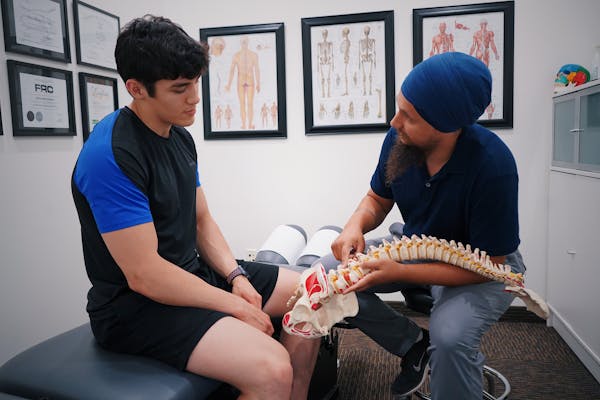
Another possible cause of your back and neck pain is the degenerative change that your spine undergoes. A person’s spinal column is made up of individual bones (vertebrae) that are joined together by the intervertebral discs, joints and ligaments. All these combined form the strong but flexible structure of your spine.
As a person ages (middle age and beyond), back and neck pain occurs as a result of the wear and tear of your intervetebral discs and other associated components of your spine. The number one cause of these degenerative changes is movement. Motion causes the neck (cervical) and the lower parts (lumbar) of the spine to gradually break down.
Being biological structures, your ligaments and joints will try to heal and repair themselves but as a result, your spine also becomes deformed with several bulging discs, buckling ligaments, and bone spurs. These changes could also affect the canals through which the nerves pass through, pinching them as a result.
Treatment
Although there is no definitive cure, back and neck pain is a highly treatable condition. The most common therapy used to treat back and neck pain is medications with pain-killing or anti-inflammatory properties.
Passive physical therapy used in conjunction with exercise (active physical therapy) is also another option. Hot or cold compresses are applied to the area affected in order to alleviate the pain. Other modalities may also be used, including the application of electric impulses in order to override the muscular spasms that so often characterize back and neck pain.
Colon Cancer
A disease in which malignant cells form in the tissues, colon cancer is known to be the most common of its type in both men and women in the United States.
Part of the body’s digestive system where it removes and processes nutrients such as vitamins, minerals, carbohydrates, fats, proteins and water from the food. It also assists in passing out waste material out of the system. The first six feet of the large intestine is called the large bowel while the last six inches is called the anal canal.
The risk factors of colon cancer include reaching the fifth decade of existence, family history, bearing polyps, background of ulcerative colitis and hereditary conditions.
When after going to the physician and putting that the prognosis is colon cancer, it does not mean that it is already the end of your life. Several tests will be done to find out if it has spread to the other parts of the body and with that, the particular stage will be determined because there also lies what should be the appropriate treatment.
There are five stages of colon cancer (0-4) that are also referred to as Duke’s A, Duke’s B, Duke’s C and Duke’s D. They are individually discussed below:
* Stage 0 refers to the earliest stage possible which is called as carcinoma in situ.
* Stage 1 means that it has extended beyond the innermost layers.
* Stage 2 is where the it has now moved to the middle layers of the colon.
* Stage 3 is when it has been found in at least three lymph nodes.
* Stage 4 is the most advanced where it has already spread to other parts of the body.
In the advancement of technology, many tools have been created to fight colon cancer. Here are some of those:
* CT scan is a special type of X- ray that allows the doctor to view what slice of you appears like. It is possible since the machine revolves around your entire body. CT scans are very beneficial in providing detailed bone pictures.
* MRI is an acronym for magnetic resonance imaging. It makes use of radio waves and magnets to do it. MRI is very helpful in taking photos of the soft tissues like the colon for example.
* Lymph node biopsy is the one that will volunteer to stay 24 hours a day when you have an injection. When checking the lymph nodes for cancer cells, it permits the doctor a clear vista of how successful it has been forcibly entering the colon while also journeying to the other sections.
* CEA assay is a kind of test that is useful for particular levels of carcinoembryonic antigen present in the blood that serve as a sign in detecting what kind of sickness. CEA assay, by the way, is just a fancy term for cancer analysis.




0 Comments