

Bulging discs commonly occur as the body ages and the intervertebral disc degenerates. However, bulging discs happen not just in senior adults but also in younger ones. At the center of the intervertebral disc is a soft and spongy substance called the nucleus pulposes.
When this substance bulges out, it puts pressure on the ligaments known as annulus fibrosis, which surrounds the core. This normally is not a cause for major concern and may not even be painful but it becomes serious when the bulging intrudes into the area of the spinal canal. When this happens, the pain can be unbearable.
While majority of people with bulging discs do not experience debilitating pain, there are a few cases when patients suffer severe and persistent low back pain caused by a bulging disc, which hinders their normal activities. The good thing is most cases of bulging discs do not require surgical treatment. Doctors usually provide initial treatment of bulging discs through non-surgical or conservative methods focusing on pain relief, both short-term and permanent, and more importantly, healing.
To help reduce inflammation, your physician may recommend that you limit your activities and get some bed rest. For mild to moderate pain, your doctor may prescribe anti-inflammatory medicines. Sometimes, patients receive steroid injections for temporary pain relief.
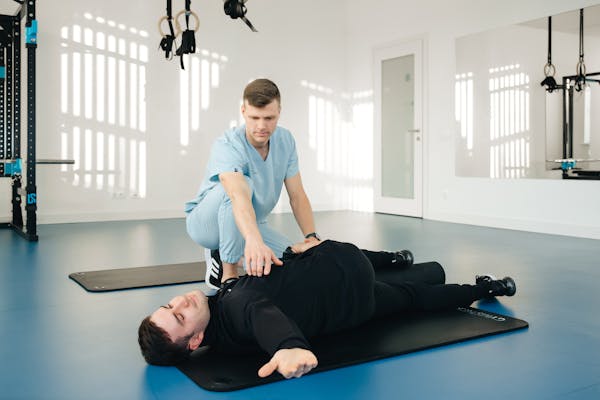
Physical therapy for bulging disc is also one of the recommended ways of treatment. Like any medical treatment, physical therapy for bulging disc starts with the doctor’s evaluation of your condition. Once the doctor has determined his diagnosis, he or she will design a program specific to your needs.
Physical therapy for bulging disc makes use of different methods, one of which is traction. In this procedure, the therapist pulls the vertebrae so the blood can flow into the damaged disc and promote healing. Another common physical therapy for bulging disc is massage therapy, which also improves blood circulation in the affected area.
Stretching exercises are also part of physical therapy for bulging disc. In addition to this, your therapist may gradually incorporate strengthening exercises into your therapy program to strengthen the muscles in your back.
Other methods in physical therapy for bulging disc are ice therapy, heat therapy, ultrasound therapy, and electrical stimulation. Your doctor or therapist may also recommend muscle relaxants and pain relief medication in combination with physical therapy for bulging disc. There are many treatment options for bulging discs. Some may work and some may not. Your doctor will help you determine which ones will work for you best.
The Promise of Pediatric Physical Therapy
Pediatric Physical Therapy is the special field of physical therapy that assists in the early detection of illness in children and uses a variety of methods of treatment. Licensed practitioners of pediatric physical therapy perform diagnosis, treatment proper, and health supervision of infants, children, and adolescents with a variety of developmental, neuromuscular, skeletal, or acquired health disorders. The role that physical therapists play in the rehabilitation of pediatric diseases could not be dejected as much as much as those of the special role of the pediatrician of child psychologist.
Children with developmental delays or congenital and non congenital conditions – cerebral palsy, down syndrome, spina bifida, and torticollis are a few of the patients treated by pediatric physical therapy. All the same, children who are measured as ‘normal’ also benefit from the therapy as it directs the improvement of their total and refined motor skills, balance and coordination, strength and endurance as well as cognitive and sensory development.
We here all the time that growth and development is crucial in the early years – crucial and capable. Children’s physiology is easy to mold into a correct form. Their health progress is receptive to performance of cardiovascular (aerobic) exercises as well as strength building (anaerobic) exercises. A plain touch therapy could make miracles.
Yet let’s put away all the medical formalities of physical therapy. Any activity done with the kids ought to be a fun activity – including pediatric physical therapy. Let us not put a promising pediatric physical therapy in the scary zone along with a knee-knocking first trip to the dentist. At any rate, a fun-filled pediatric therapy is part of the therapy. It’s a great way to connect the kids with their parents, and to boost their self- esteem.
And all is possible even through a simple regular exercise. As children get involved in physical activities early in life, they have less chances of undergoing more stringent therapies in the future. There is definitely an explanation for the maxim, ‘Prevention is better than cure’. Pediatric physical therapy clearly illustrates. And the children won’t even know it.
Make them do a soccer ball kicking, jumping jack, rolling, alternate toe touch, tumbling, arm circles, truck rotation, beach ball catch, or any exciting exercises you can come up with the therapist – complete with a game objective or music. With pediatric physical therapy, kids could feel kids again. They would feel the attention. And apart from the gentle touch, they’d feel loved.


0 Comments