

Known throughout India and the world as a meditation technique, the Kriya Yoga was one of the ancient types of yoga that were kept hidden in secrecy for a number of years. It was only made open to the public as one of the yoga practices when it was revived in 1861 by one of its practitioners, Mahavatar Babaji. This man taught the practice to one of his disciples, Lahiri Mahasaya who in turn made the Kriya Yoga widely known.
The Kriya Yoga actually appear in the public as a yoga technique when another disciple of Babaji named, Paramhansa Yogananda published his book entitle “Autobiography of a Yogi”. It was also this man who first claimed that Kriya Yoga is the most effective type of the meditation practices that were made available to mankind. According to him, the practice was developed to attain the main purpose of yoga, which is but union with the divine.
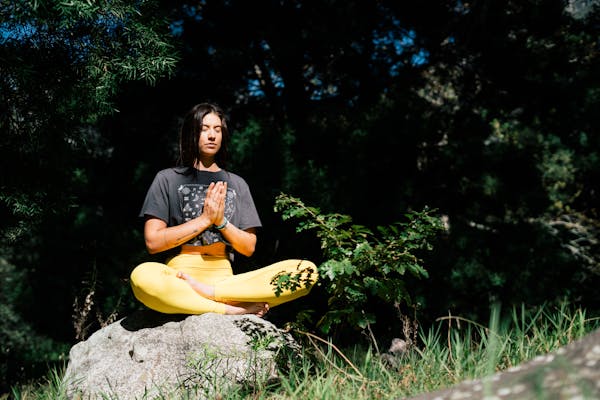
The Kriya Technique
On the most basic, the practice of Kriya Yoga embraces a technique that specifically highlights the bond between mind and breath. This principle is maintained until now believing that breath influences the mind and vice versa. Thus, Kriya Yoga considered breath control as a self control, and the mastery of breath is the mastery of self. Well, it is for this belief that breathing is considered in this practice as an important element that people should consider.
The Kriya Yoga techniques, aside from breathing, are centered significantly on promoting energy. The postures are developed to open the spinal networks in the body for the spine to be energized. And, to help make this possible certain exercises that involve proper breathing is highly considered.
It is further interesting to know that the technique involves in Kriya Yoga are practiced through a form of initiation. The techniques are taught to beginners by an expert as simply a practice, but during the initiation, it is expected that the practitioner’s body will be purified then opening a chance for deep meditation.
How to Become a Kriya Yogi
Unlike the other types of yoga, the Kriya Yoga has established its own paths for its followers to heed in order to obtain a sense of oneness. First, they must undergo the technique maintained by Paramhansa Yoganada which simply involves an spiritual practice of Kriya. Then, they must learn how to open their minds and hearts for certain possibilities. After which, they should follow the Ananda technique which involves energization poses, the Aum meditation technique, the Hong-Sau concentration technique, and finally the Kriya technique.
It is worth noting though that the ultimate effects of Kriya Yoga can’t be obtained in just a matter of days or weeks. The truth is, the process involved in the practice may take for about a year or more, depending on the level of interest paid by the student.
The Practice of Iyengar Yoga
Created by B.K.S. Iyengar, the Iyengar Yoga is one form of yoga that is known specifically for its unique techniques, timing and sequences. It is practiced by knowing everything about the asanas and pranayama, the former being the posture and the latter referring to breath control.
There are a number of asanas and pranayama techniques involved in Iyengar yoga. As far as I know, the asanas involved is about 200, all are classical in style. On the other hand, the pranayama techniques come in 14 different forms; many of them are merely variations. Note that these techniques are generally considered in Iyengar yoga for one purpose – to allow the practitioners to move on and develop their skills safely and surely.
Asana in Iyengar Yoga
When it comes to asana, the Iyengar yoga focuses mainly on three different aspects. The first has something to do with proper body alignment, while the others are highly focused on the props and the therapeutic aspects of the practice.
According to the principles of Iyengar, the asanas are important to be performed with the right props. The props may involve chairs, belts, wooden blocks, and belts. These are given importance believing that they can help support the body to acquire the correct positions. Also, the asanas are considered in Iyengar yoga knowing that when they are performed correctly, they can help the body to develop beautifully, making the body stronger and flexible.
The Iyengar yoga also believes that through the asanas, certain medical conditions, even the most serious problem, can be treated easily and quickly. However, this therapeutic effect of the Iyengar yoga can only be made possible under the guidance of yoga pro.
Pranayama in Iyengar Yoga
As maintained by the principles of Iyengar, the pranayama or breath control can only be made evident after the basics of asana have been established. This means that breath control is only once the students of Iyengar have already learned everything about proper alignment and posture. The pranayama must also be practiced once the students are flexible enough to undergo several advanced techniques.
According to several claims, the pranayama of Iyengar yoga can offer a number of physical benefits to the person practicing it. Among the most recognized benefits of breath control are activation of internal organs, toning of digestive, respiratory, nervous and circulatory systems, and the feeling of calmness. This can even prepare the body for deep meditation, which is but another important element of Iyengar yoga.


0 Comments